Friday, September 16, 2016

Update: Takata Airbag Recall – Jonathan C. Reiter Mass Disaster Attorney Offers Insight

If you or a loved one has been injured by a defective airbag call the New York mass transportation accident lawyer Jonathan C. Reiter for a free case evaluation

update-takata-airbag-recall-jonathan-c-reiter-mass-disaster-attorney-offers-insightIf you drive in the U.S. today, you can’t afford to get behind the wheel of any vehicle without knowing about the Takata airbag recall. By far the largest auto recall in American history, the recall encompasses 40 million vehicles in the U.S. and more than 100 million worldwide. In the United States, it spans 14 automakers and includes both domestic and foreign cars and trucks. The recall also applies to both driver-side and passenger-side airbags.

The National Highway Traffic Safety Administration (NHTSA) has called it the “most complex” auto recall ever. No matter what kind of car you drive, it’s important to make sure your vehicle is safe. If you have a defective Takata airbag, you can get it replaced at no charge. Taking action could save your life or the life of a loved one.

Why Are the Takata Airbags Defective?

The first wave of Takata airbag recalls began in April 2013. Over the past few years, several more waves have been issued.

The problem with the airbags, which were installed in cars manufactured between 2002 and 2015, is the metal cartridge that holds the airbag’s propellant wafers and acts as the airbag’s inflater. In some crashes, these defective inflaters explode, sending metal shrapnel and other debris flying through the vehicle at high speeds. The faulty inflaters also sometimes cause the airbag to inflate improperly, rendering it ineffective in a crash. As of July 2016, there have been 10 confirmed deaths and over 100 injuries caused by Takata airbags.

Multiple sources say Takata knew about the defective airbags all the way back in 2004, but failed to take any action and neglected to notify the NHTSA that it’s faulty airbags were linked to fatal accidents and injuries. Another report says Takata allowed a defect rate six to eight times higher than the acceptable rate. To put this into perspective, Takata allowed 60 to 80 defective airbags per 1 million to leave its factory.

How Many Defective Airbags Have Been Repaired?

According to the NHTSA, more than 10 million defective Takata airbags have been repaired as of August 12, 2016, including over 5 million driver-side airbags and more than 4 million passenger-side airbags. The NHTSA also says that Honda Acuras manufactured between 2001 and 2003 have a high risk of ruptures.

The Takata airbag recall continues to grow, so it’s important to continue checking to see if your vehicle has been recalled. To find out if your car is on the recall list, go to safercar.gov and enter your vehicle’s VIN number. The safercar.gov website covers all recalls issued within the last 15 years.

New York Mass Transportation Accident Lawyer

Recalls of this magnitude are fortunately rare. When they occur, however, they are a sobering reminder that, no matter how many safety checks we put on auto manufacturers, defective vehicles and vehicle components can still enter the stream of commerce.

If you or a loved one has been injured in a motor vehicle collision, or you have lost a loved one in a crash caused by a defective vehicle or part, call New York mass transportation accident lawyer Jonathan C. Reiter for a free case evaluation. 646-863-8172.


Jonathan C. Reiter Law Firm, PLLC

The Empire State Building

350 5th Avenue #6400

New York, NY 10118

T: (212) 736-0979

Facebook

The post Update: Takata Airbag Recall – Jonathan C. Reiter Mass Disaster Attorney Offers Insight appeared first on Injury Accident News.


from Injury Accident News

Thursday, September 8, 2016

California Enacts New Safety Rules for Charter Buses

New York bus and transportation accident lawyer says California Enacts New Safety Rules for Charter Buses

california-enacts-new-safety-rules-for-charter-busesWhether you’re a frequent flyer or just an occasional air passenger, you are probably familiar with the safety announcements that take place prior to any flight. In most cases, flight attendants stand at various places in the cabin and give passengers a comprehensive safety briefing about what to do in a variety of emergency situations. This information may seem routine, but it can save your life in a crash.

But how often do charter buses instruct their passengers on safety procedures? Probably not too often, because there are no federal laws requiring them to do so. As reported by the Washington Post, motorcoaches – which are also called charter buses – are not as regulated as airplanes. Bus drivers are not required to give passengers safety briefings, nor do they have to instruct passengers on evacuation procedures. There are also no federal regulations requiring motorcoaches to have fireproofing or data recorders – two safety precautions found on all domestic aircraft and the majority of airplanes abroad.

Tragically, the push for these safety measures usually only comes after a disaster resulting in a major loss of life. In 2014, the National Transportation Safety Board (NTSB) urged the National Highway Traffic Safety Administration (NHTSA) to create stricter safety regulations for motorcoach and charter bus companies.

The NTSB recommendations came amid the agency’s investigation of a horrific California bus crash that killed 10 people, including five high school students who were on a trip to visit colleges. The crash occurred when a FedEx tractor-trailer crossed the median and first struck a car, then the motorcoach head-on. Diesel fuel from the semi-truck poured into the bus cabin, igniting in a fiery blast that immediately engulfed the bus. The majority of the fatalities were caused by smoke inhalation.

California’s New Motorcoach Safety Regulations

Although the NHTSA has yet to take action to increase charter bus safety, California lawmakers have approved new rules for all charter bus companies operating in the state. According to the Los Angeles Times, the new rules require all motorcoaches manufactured after July 1, 2020 and equipped to carry 39 or more passengers to have emergency lighting installed. The rules also require mandatory passenger safety briefings prior to any trip.

The proposed legislation would have also required motorcoaches to have a second exit door, however, that portion of the proposed bill was dropped when representatives of the motorcoach industry claimed it would be too expensive to implement.

Sadly, the 2014 charter bus accident is by no means an isolated incident. In May 2016, a charter bus crash resulted in eight deaths and dozens of injuries. According to NBC News, the crash occurred late in the evening, during a period of rain. The bus driver lost control of the bus, causing it to roll over.      

New York Bus Accident Lawyer

If you or a loved one has been injured in a charter bus accident, or you have lost a loved one in this type of accident, call New York bus and transportation accident lawyer Jonathan C. Reiter for a free case evaluation.


Jonathan C. Reiter Law Firm, PLLC

Jonathan C. Reiter Law Firm, PLLC

The Empire State Building

350 5th Avenue #6400

New York, NY 10118

T: (212) 736-0979

Facebook

Source: Jonathan C. Reiter Law Firm, PLLC

The post California Enacts New Safety Rules for Charter Buses appeared first on Injury Accident News.


from Injury Accident News

Wednesday, September 7, 2016

What Causes Aviation Accidents?

New York Aviation Accidents Lawyer Explains the Big Picture!

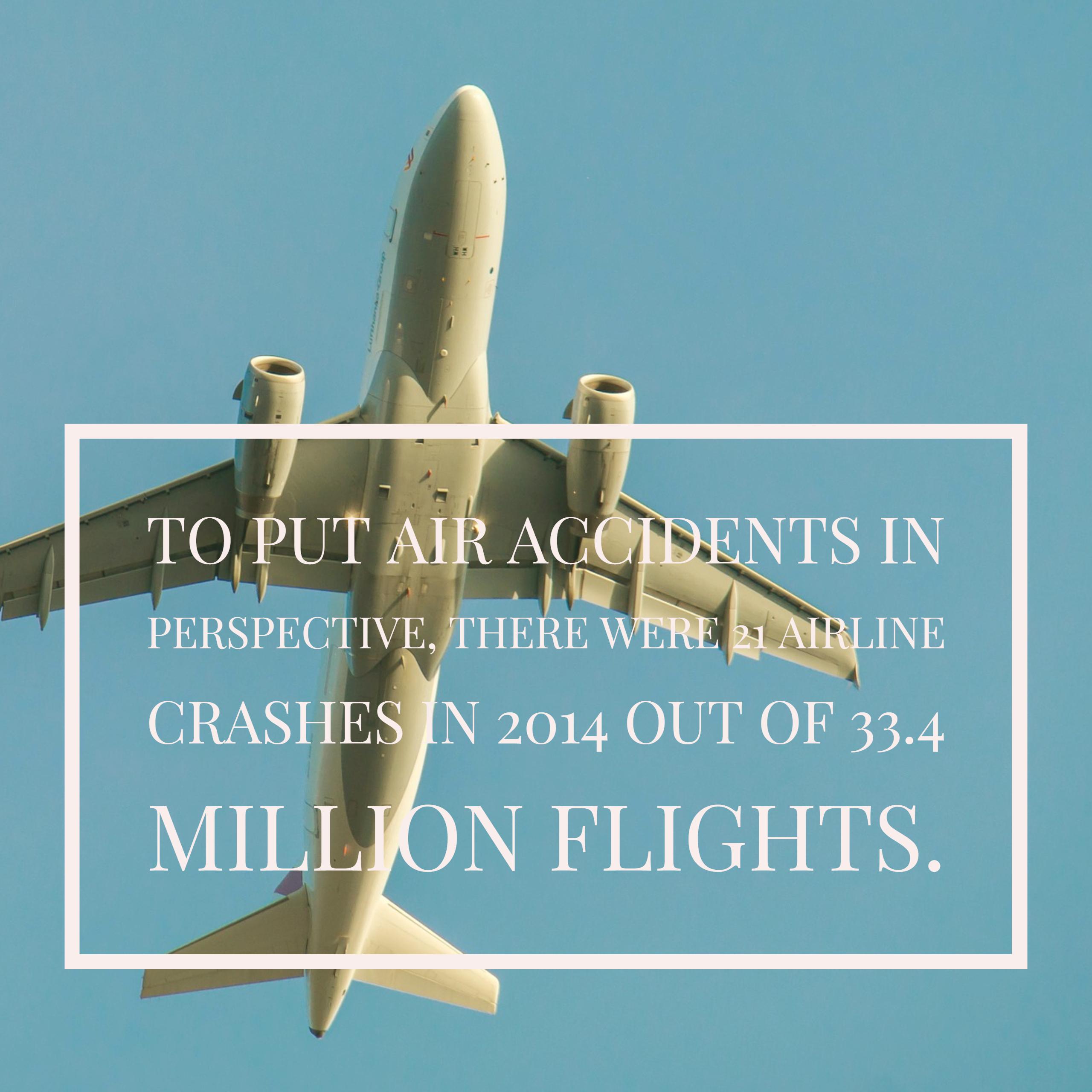
what-causes-aviation-accidentsAviation disasters are fortunately rare, but they are horrifying and often fatal when they do happen. They also make headlines around the world, which can cause even frequent flyers to think twice about taking to the skies. To put air accidents in perspective, there were 21 airline crashes in 2014 out of  33.4 million flights.

A big part of understanding the risks of flying is understanding why and how accidents happen.

Human Error

No matter how technologically advanced the airplane, every flight is vulnerable to the possibility of human error. In fact, human error accounts for 80 percent of all airline accidents, both fatal and non-fatal. Furthermore, it’s not just a pilot’s negligence that can cause an aviation accident. Crashes can happen due to a mechanic’s error, negligence on the part of the ground crew, or miscommunication in the tower.

Flights in Developing Countries

Air travel is also much riskier in developing nations. The chance of a fatal accident is 1 in 19.8 million for passengers flying in the developed world. This ratio plummets to 1 in 2 million in nations with poor safety records. The majority of airlines with dismal safety ratings are located in Africa, the ex-Soviet nations, and countries in Southeast Asia. For example, Indonesia’s aviation death rate is 25 times higher than that of U.S.-based airlines.

Regional and Commuter Airlines

There is also a considerable gap in safety rankings between major air carriers and small regional and commuter airlines. Budget airlines tends to pay their pilots less on average, which means their pilots tend to have less experience and fewer hours in the cockpit compared to pilots for large commercial airlines. For example, between 2003 and 2009, commuter flights had crash rates 10 times higher than rates for the major U.S. airlines.

Flight Safety Features

Over the past 70 years, airlines have added numerous safety features designed to reduce crashes. Most people have heard of the “black box” used to record conversations in the cockpit, as well as instrument readings. These devices were pioneered in the 1950s and are now standard in all aircraft.

The FAA also began requiring ground proximity warning systems in the 1970s, followed by collision avoidance technology in the early 1980s. This technology expanded to automated avoidance systems in the mid-2000s. Today, aircraft can automatically navigate away from solid obstacles, such as trees, buildings, and other aircraft.  

New York Aviation Accidents Lawyer

If you or a loved one has been injured in an aviation crash, or you have lost a loved one in an aviation accident, call New York aviation accident lawyer Jonathan C. Reiter for a free case evaluation. (212) 736-0979


Jonathan C. Reiter Law Firm, PLLC

The Empire State Building

350 5th Avenue #6400

New York, NY 10118

T: (212) 736-0979

Facebook

The post What Causes Aviation Accidents? appeared first on Injury Accident News.


from Injury Accident News